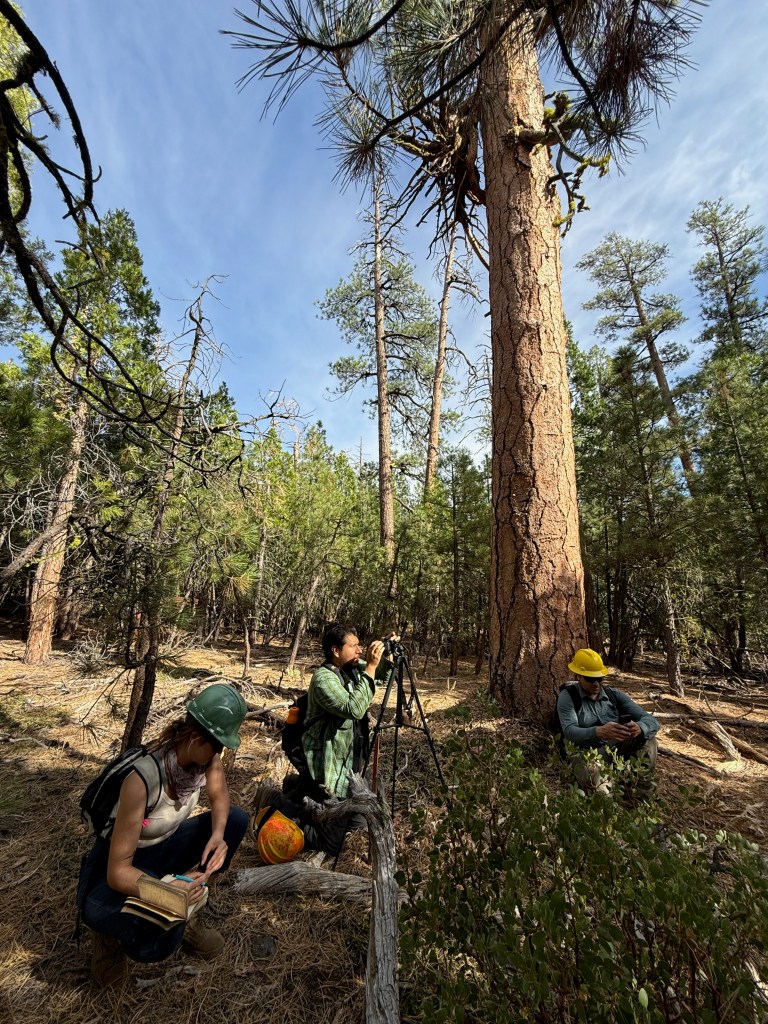
Here are some of the research activities that are taking place in our research group at CalPoly, SLO. We collaborate with forestry stakeholders both locally, and regionally, including with USDA Forest Service, CAL-FIRE and UC Berkeley (Blodgett Forest).
Best Management Practices – lead: A. Bensching (MS-student), Assata Golash
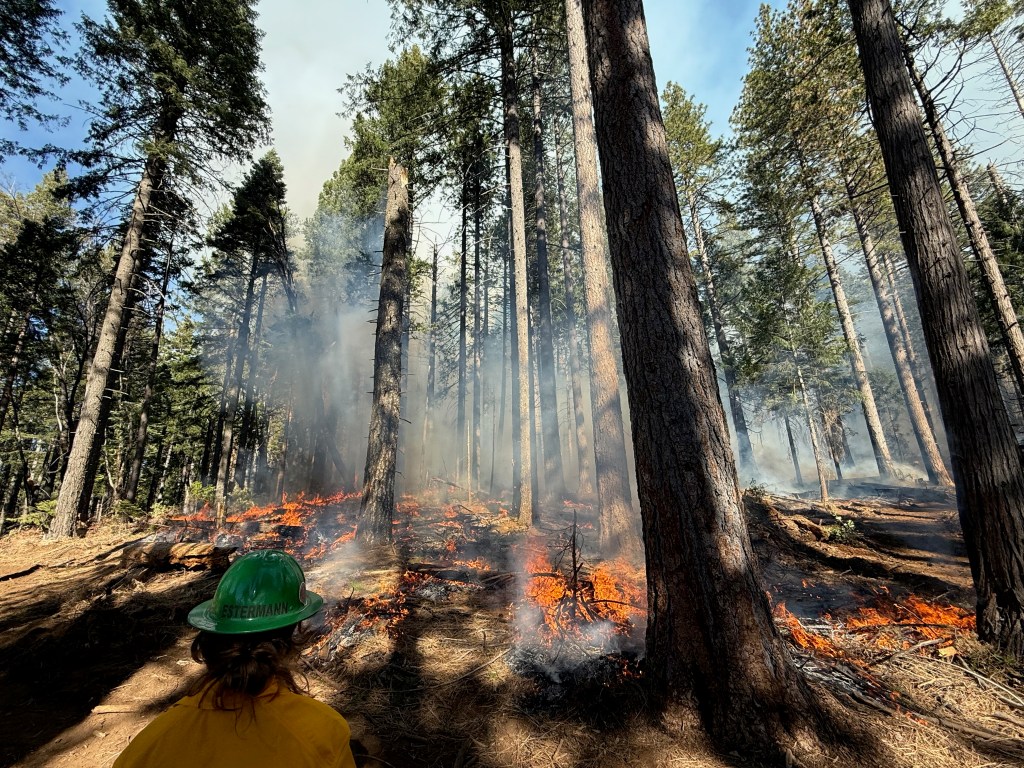
Best Management Practices (BMPs) are commonly used to guide forest operations, especially to protect water and soil. However, these guidelines rarely include specific instructions for biomass management (and by that extension, carbon), fuel reduction, and fire management. California has ambitious goals to increase on the ground fuel and forest treatments to improve the long-term resilience of forested landscapes across the state.
In response, we are reviewing BMPs used across the United States and gather input from California forest professionals and landowners to understand the practical and policy barriers they face. Early findings show that without stronger guidance and clearer definitions, it will be hard to scale up forest treatments or make offset programs more effective. Our goal is to help improve forest guidelines so they include carbon, wildfire, and biomass objectives, making them more useful for today’s climate and forest challenges.
Testing Improved Forest Management in a California Mixed Conifer Forest in the Context of Wildfire Inevitability – lead: J. Garcia, MS-student
This project evaluates the accuracy of the Forest Vegetation Simulator (FVS), a widely used forest growth model approved for use in California’s carbon offset programs. FVS helps estimate how much carbon is stored in forests over time, but few studies have tested its performance in California. Using 20 years of continuous forest inventory data from Blacks Mountain Experimental Forest, this study compares observed forest growth to model predictions from the South-Central Oregon and Northeastern California (SO) variant of FVS. The project focuses on key forest metrics including tree diameter, height, mortality, and aboveground carbon. Results from this work will help improve model calibration and ensure more reliable carbon accounting in forest offset projects.
Post-Fire Carbon in Coastal Redwood Forests – lead: A. Rose (MS-student), J. Garcia, A. Ceja, M. Navarro
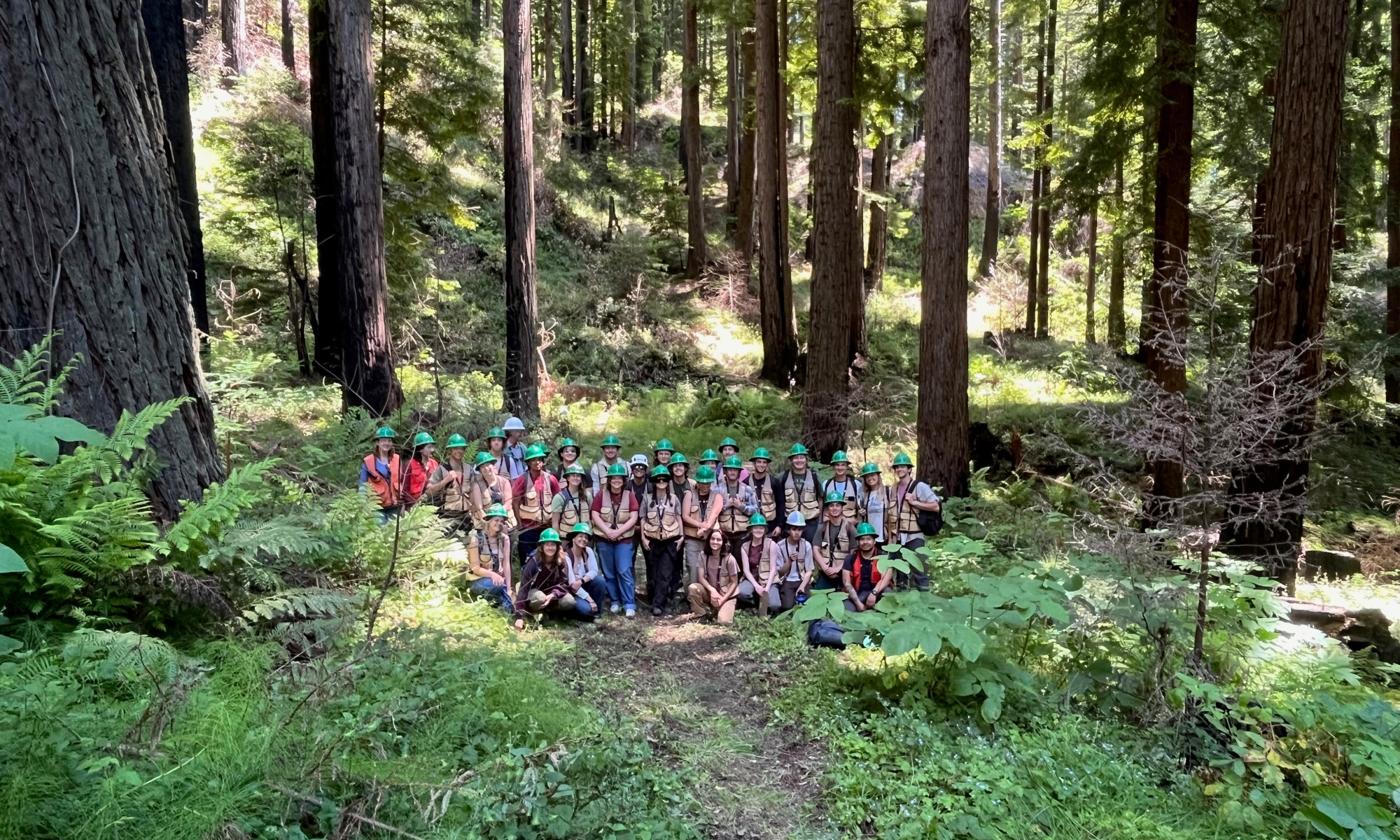
This research project explores how wildfire severity impacts redwood forest recovery and carbon storage. At Swanton Pacific Ranch (CalPoly), students collected field data on tree biomass and understory vegetation across plots with varying fire severity. Using a new hemispherical photo method, students measured canopy cover and light availability. Preliminary findings show low-severity plots had the highest redwood biomass, while high-severity plots had dense understory growth dominated by Ceanothus oliganthus.. This work supports climate-smart forest recovery and hands-on training in forest monitoring tools.
Forest Carbon Offsets and Improved Forest Management in the U.S. – lead Sophia Kupka (MS-student), Nicole Weaver, Assata Golash
This student-led project explores how improved forest management (IFM) practices are used in U.S.-based forest carbon offset projects. Using data from major carbon registries (CAR and ACR), students reviewed hundreds of projects to track trends in carbon offset credits and the management strategies behind them. The team analyzed project records to identify where offsets are issued, what forest practices are applied, and how those have shifted over time. Early findings show that while many early projects used minimal or no management, newer projects tend to apply more active and varied forest management techniques. This project helps bring transparency to the forest carbon market and highlights the role of forest practices in climate solutions.
(All photos on this website copyright of Lilli Kaarakka).
 Dr. Lilli Kaarakka